Science

A Nobel Laureate Chemist at METU: Insights from the Q&A Session with Prof. Dr. Morten Meldal

Attending a prestigious university yields numerous academic and personal advancements. Prominent among these benefits are comprehensive social development, cultural enrichment, and the acquisition of an extensive professional network. Beyond these highly tangible advantages, an elite institution offers unparalleled experiential opportunities. Through the institutional reputation and resources of such universities, students gain access to leading figures […]


A Nobel Laureate Chemist at METU: Insights from the Q&A Session with Prof. Dr. Morten Meldal Read Post »

athletes running on track and field oval in grayscale photography

Hysterical Strength: Pushing the Boundaries of the Human Body

The human body possesses clear biological and physical limits, and surpassing these boundaries is impossible for most people. Those who push their bodies to extremes and venture into new thresholds are today’s Olympians. With exceptional physical conditioning and unwavering determination, they train relentlessly in pursuit of their goals. They are there to break new records

Hysterical Strength: Pushing the Boundaries of the Human Body Read Post »

Dinopithecus: The Terrible Ape of Prehistoric Africa

Introduction Dinopithecus is an extinct prehistoric mammal that lived in South Africa and Ethiopia during the Pliocene and Pleistocene epochs. It is also known as the “terrible ape.” Closely related to modern baboons, it was enormous in comparison to them. In the past, it spread fear across its environment, preying on our ancestors as well

Dinopithecus: The Terrible Ape of Prehistoric Africa Read Post »

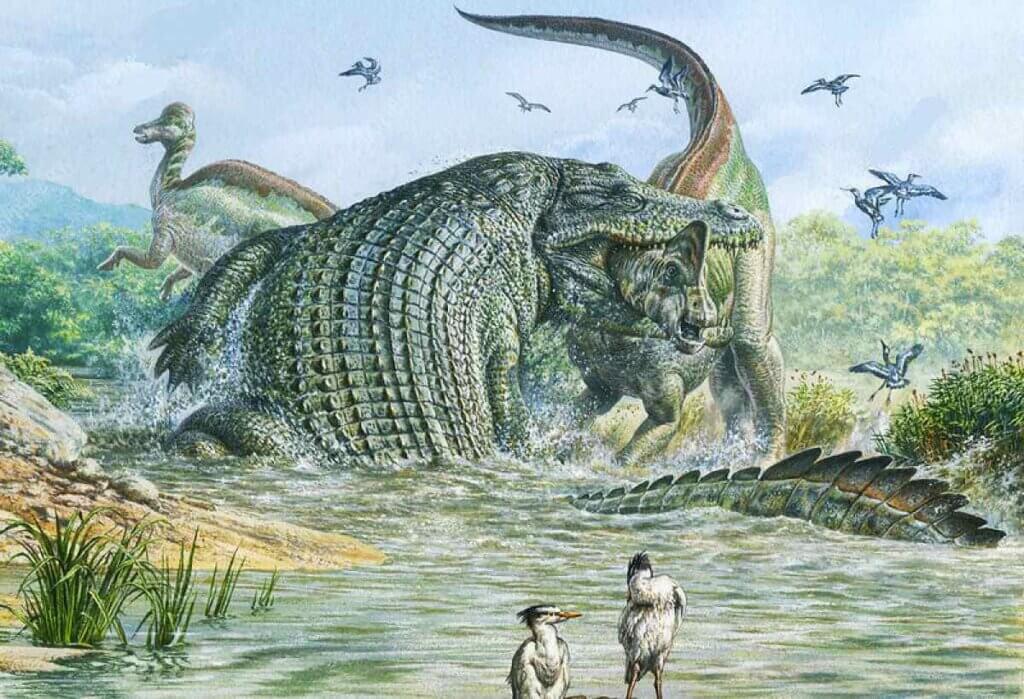
“How Deinosuchus Hunted Dinosaurs and Dominated the Waters

Modern crocodiles – with their bone-crushing jaws, armored scales, and infamous “death rolls” – are already formidable predators we all recognize. While today’s 3-meter-long crocodiles hunting zebras and antelopes in documentaries seem impressive, they pale in comparison to their ancient ancestors. Enter Deinosuchus – the “terrible crocodile.” This prehistoric behemoth didn’t just hunt animals; it preyed on dinosaurs.

“How Deinosuchus Hunted Dinosaurs and Dominated the Waters Read Post »

Clifton Gorge

Discovery of Helium: Story of the First Noble Gas

The discovery of helium dates back to a series of 19th-century scientific breakthroughs. While most people recognize helium today as the gas that produces voice-altering effects when inhaled, its scientific importance extends far beyond this trivial application. This article will systematically examine helium’s properties, historical discovery, and modern applications. Properties of Helium Helium was produced

Discovery of Helium: Story of the First Noble Gas Read Post »

a close up shot of a kelp gull

From Scavengers to Killers: The Transformation of Kelp Gulls

Kelp gulls (Larus dominicanus) are a seabird species native to the Southern Hemisphere and currently under protection. These gulls nest and hunt along coastlines and islands throughout the region. Like other gull species, kelp gulls exhibit an opportunistic feeding behavior, consuming a wide variety of prey, including fish, coastal reptiles, and even some larger mammals.

From Scavengers to Killers: The Transformation of Kelp Gulls Read Post »

Kardashev Scale: Civilizations Have Levels

The Kardashev scale is a term familiar to those interested in astronomy and science fiction. Thanks to platforms like Evrim Ağacı( a famous Turkish Youtube channel) and other popular YouTube channels like Kurzgesagt, this concept has gradually gained recognition among the general public but for those unfamiliar with it, what does this term mean? Do

Kardashev Scale: Civilizations Have Levels Read Post »

Henry Cavendish tasvir edilmiş

Henry Cavendish and Discovery of Hydrogen

Henry Cavendish was a renowned chemist and physicist who was celebrated for his numerous scientific accomplishments. Most of us recognize him as the discoverer of hydrogen, a name often encountered in textbooks. Beyond his identity as a scientist, Cavendish was also an aristocrat who contributed to various scientific fields in addition to discovering hydrogen. This

Henry Cavendish and Discovery of Hydrogen Read Post »

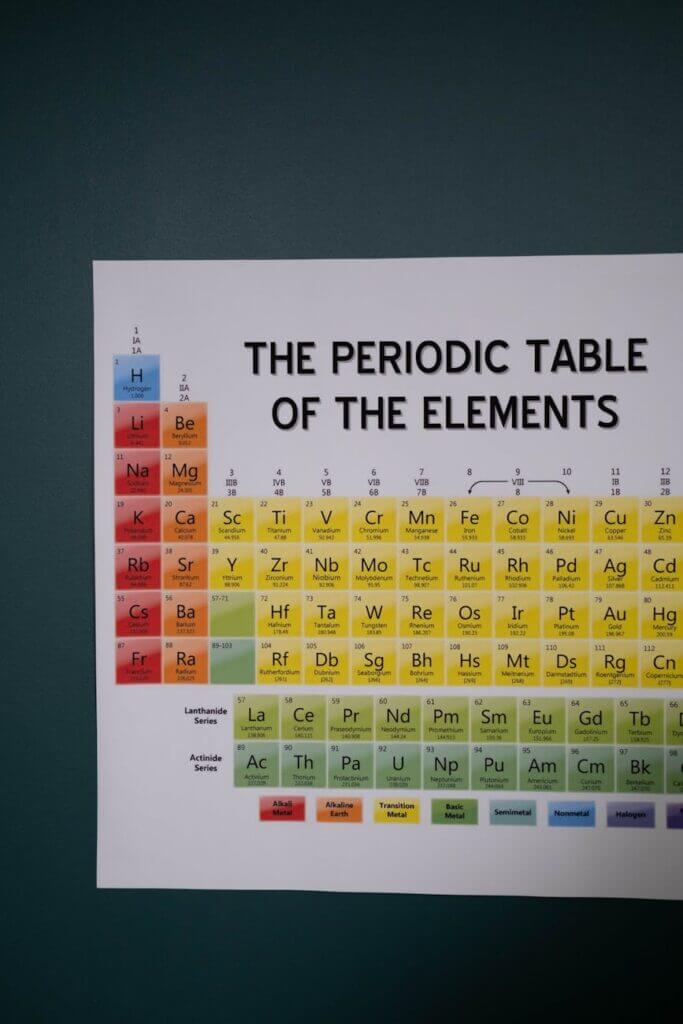
close up photo of periyodik tablo of elements

Historical Development of the Periodic Table: Key Figures and Discoveries

What is the Periodic Table In its most concise definition, the periodic table is a chart that organizes elements in order of increasing proton numbers. For many, this table is one of the first concepts that comes to mind when thinking of chemistry. For us chemists, however, it is an invaluable tool that greatly simplifies

Historical Development of the Periodic Table: Key Figures and Discoveries Read Post »

Scroll to Top